Biochemistry taught me to enjoy the slow part. A metabolic pathway only clicks after you've worked through every step, and a math proof is the same. Code gave me that feeling with faster feedback: I try something, watch it fail, and know why within the hour. That's what pulled me into a computer science minor.
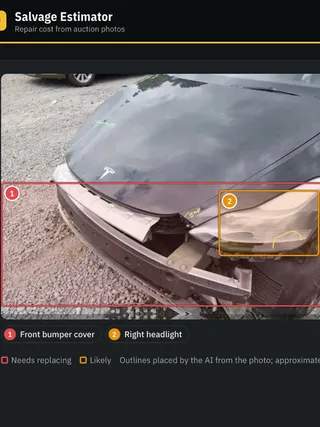
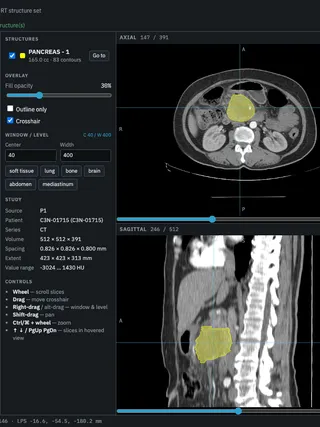
I think software should work for everyone who has to use it, not only people who are good with computers. So before I write anything, I find out what the person using it actually wants. The salvage estimator started as a voice memo from the dealership's owner, and its main page has a single input box because the owner wanted it to work for anyone from 12 to 81. A researcher shouldn't have to upload a patient's scan to look at it, and a small lot shouldn't lose a bid because a bigger one has ten appraisers.
On a team I treat leading as a service job: take the unglamorous task, write things down, make sure nobody is stuck. In my labs I'm one of the newest people in the room, so I listen first and learn how the group works. Coaching debate and tennis is the opposite. There I'm the one talking, and the job is to keep explaining until it makes sense to the person in front of me.
University of Nebraska–Lincoln · B.S. Biochemistry and Mathematics, minor in Computer Science · May 2028 · 3.95 GPA